Technology environments are becoming more visual, more connected, and more dependent on professional audiovisual systems. Corporate studios, livestreaming rooms, video conferencing spaces, broadcast facilities, training centers, event venues, and content production areas increasingly bring information technology and audiovisual equipment together under one roof. That convergence is changing the equipment professionals rely on, including some materials that once belonged almost exclusively to film and theatrical production.
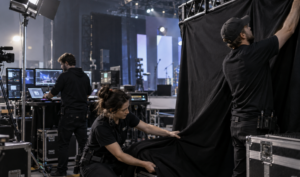
One of those materials is black duvetyne. Known for its dark, matte surface and ability to absorb light rather than reflect it, duvetyne is finding a broader role in technology-driven environments. IT and AV teams are using it to improve camera backgrounds, control unwanted reflections, hide equipment, create temporary barriers, manage visual distractions, and produce cleaner-looking spaces for streaming and digital communication.
As developments covered by publications such as WIRED demonstrate, technology is no longer limited to computers, networks, and software. Modern technology infrastructure increasingly includes cameras, displays, lighting systems, audio equipment, streaming hardware, and digitally controlled environments. That expansion is creating demand for practical materials that solve physical production problems without requiring major construction or complicated installation.
The Growing Connection Between IT and AV
Information technology and audiovisual technology were once managed as largely separate disciplines. IT departments concentrated on computers, servers, networks, telecommunications, and software, while AV specialists handled microphones, projectors, video systems, lighting, staging, and presentation equipment.
Those lines have steadily blurred.
Video conferencing systems operate over corporate networks. Digital signage platforms depend on cloud-based software. Cameras connect through IP networks. Audio is distributed digitally. Conference rooms rely on integrated control systems. Livestreaming requires computers, networking equipment, cameras, microphones, lighting, and production software to function together.
The broader definition of information technology described by Wikipedia reflects how extensively computing and communications systems have become embedded in modern organizations. In many workplaces, IT teams are now responsible for technology environments that include visual presentation and video production systems alongside conventional computing infrastructure.
This convergence means IT professionals increasingly encounter the same environmental problems that film crews and AV technicians have managed for decades. Reflections interfere with camera images. Bright surfaces create unwanted light. Equipment needs to be concealed. Backgrounds need to appear consistent. Temporary spaces must sometimes be converted into professional-looking production areas within hours.
These are physical problems, but they directly affect digital results.
Light Control Has Become an IT Consideration
Lighting is increasingly important in technology environments because cameras are everywhere. Corporate meetings may be streamed to remote employees. Executives record presentations for customers and investors. Universities produce online courses. Businesses create product demonstrations. Technical teams host webinars and virtual events.
A room that looks acceptable to the human eye can look very different through a professional camera.
Light reflecting from walls, floors, equipment racks, tables, windows, and other surfaces can create glare, reduce contrast, or distract from the subject. In environments containing large monitors and LED displays, reflected light can become even more noticeable.
A strategically positioned piece of black fabric can reduce those problems without permanently modifying the room. Professionals can use Duvetyne Roll material to cover reflective surfaces, create darkened sections, construct temporary backgrounds, or block stray light entering a camera’s field of view.
This approach is especially practical in multipurpose environments where permanent changes are not desirable.
Professional Streaming Is Changing the Workplace
Livestreaming has evolved from a specialized broadcasting activity into a routine business function. Companies now stream conferences, training programs, interviews, product launches, internal announcements, webinars, podcasts, and social media content.
Technology publications including TechCrunch regularly cover the platforms, devices, software, and digital services shaping online communication. Behind those technologies is a physical production environment that must still be controlled.
A sophisticated camera cannot eliminate every distracting object in a room. Expensive lighting cannot always compensate for uncontrolled reflections. Advanced streaming software cannot remove every visual distraction without affecting image quality.
Physical light-control materials therefore remain useful even in highly digital production workflows.
A roll of matte black fabric can quickly transform an ordinary office or conference room into a more controlled production environment. It can conceal shelving, storage areas, cables, unused monitors, doors, equipment cases, and other objects that would otherwise appear in the frame.
For IT teams supporting internal video production, that flexibility can be especially valuable.
Temporary Studios Need Flexible Materials
Not every organization has the budget or space for a permanent broadcast studio. Many businesses create temporary studios inside conference rooms, training rooms, warehouses, offices, hotel meeting spaces, and event facilities.
Flexibility becomes critical in these situations.
Permanent wall treatments may not be possible. Large scenic structures can be expensive to transport and store. Hard panels require considerable space. Temporary fabric systems can provide a faster alternative.
Black duvetyne can be suspended from appropriate support systems, placed behind presenters, positioned beside lighting equipment, or used to conceal areas outside the desired production environment.
For companies following developments reported by Ars Technica, the rapid evolution of cameras, computing hardware, networking, and digital media means production setups are changing frequently. A flexible physical environment makes it easier to adapt as technology changes.
Instead of rebuilding a room every time equipment or production requirements change, teams can reconfigure lightweight materials around the technology already in place.
Cleaner Camera Backgrounds Improve Digital Communication
Professional communication depends heavily on presentation.
A high-resolution camera may actually make an uncontrolled environment look worse because it reveals more detail. Cables, equipment cases, storage shelves, wall fixtures, and distracting reflections become clearly visible.
Creating a simple dark background helps place attention on the speaker, product, or presentation rather than the room itself.
This matters in executive communications, online training, technical demonstrations, interviews, product videos, and corporate events. A controlled background can also help maintain visual consistency when different videos are recorded in the same space.
Publications such as The Verge frequently document how rapidly video hardware, displays, cameras, consumer electronics, and digital communication platforms continue to evolve. Better technology increases expectations for presentation quality. Audiences now routinely see polished livestreams and professionally produced online video, even from organizations that are not traditional media companies.
That raises the standard for everyone producing digital content.
Equipment Masking Creates More Professional Installations
AV environments often contain equipment that needs to remain accessible but does not need to remain visible.
Temporary installations may include cable runs, cases, stands, carts, control equipment, storage containers, power distribution hardware, and other infrastructure necessary for the production. These items can make an otherwise polished environment appear unfinished.
Matte black fabric can provide visual masking while allowing technicians to retain access to equipment when necessary.
This is particularly useful for trade shows, conferences, corporate presentations, temporary control areas, livestreaming setups, and event technology installations. Instead of constructing rigid walls around technical equipment, crews can create lightweight visual barriers that can be removed or repositioned as the setup changes.
The result is a cleaner environment without sacrificing operational flexibility.
Virtual Production Makes Reflection Control Even More Important
Large LED displays and virtual production technologies are expanding beyond major film studios. Corporate production centers, universities, event companies, content creators, and specialized AV integrators are experimenting with increasingly sophisticated display environments.
These installations can produce substantial amounts of light.
Reflections from surrounding objects may interfere with camera images or make it more difficult to maintain visual separation between different areas of a production space. Matte materials positioned outside the primary display area can help reduce uncontrolled light.
Coverage from ZDNET illustrates how computing, enterprise technology, displays, artificial intelligence, communications, and digital workflows increasingly intersect. Modern AV spaces reflect that same convergence.
The physical room is becoming part of the technology system.
Light, sound, backgrounds, displays, networking, computing, and cameras all influence the final output. Improving one part of that environment can therefore improve the performance of the entire production workflow.
Portability Matters for IT and AV Teams
Technology teams rarely work in only one environment. Equipment may move between conference rooms, event spaces, temporary studios, customer locations, convention centers, classrooms, and corporate offices.
Portable materials make those transitions easier.
Fabric rolls can be transported and stored more efficiently than many rigid scenic materials. Crews can cut or configure material according to the requirements of an individual installation. When the production changes, the fabric can often be repositioned or replaced without redesigning the entire space.
This flexibility is valuable for AV integrators, event technology companies, corporate media teams, educational institutions, houses of worship, livestreaming crews, and organizations maintaining multiple video production environments.
The ability to solve visual problems quickly becomes particularly important when technicians have limited setup time.
Technology Is Becoming More Environmentally Aware
The technology industry increasingly focuses on how devices interact with their surroundings rather than treating hardware as isolated equipment.
Displays are brighter. Cameras are more sensitive. Video resolution continues to increase. Remote communication is more common. Digital content is expected to look professional across laptops, televisions, phones, and large displays.
Research and reporting from MIT Technology Review regularly highlight the continuing transformation of digital technology and its role across business and society. As digital systems become more capable, the environments surrounding those systems matter more.
A camera system worth thousands of dollars can still produce disappointing results when the room contains uncontrolled light or distracting visual elements.
Simple environmental improvements can sometimes deliver noticeable benefits without requiring another major technology purchase.
A Practical Tool in an Increasingly Digital Workplace
The most useful technologies are not always electronic.
Modern IT and AV professionals work within ecosystems that combine hardware, software, networking, lighting, audio, video, architecture, and physical space. Managing those environments requires both sophisticated digital systems and practical production tools.
Black theatrical fabric fits naturally into that combination because it solves several problems at once. It can help control light, improve backgrounds, hide equipment, divide spaces, and support temporary production environments.
That versatility makes it particularly relevant as more organizations develop internal media capabilities.
Businesses that once hired outside crews for every video project are increasingly building internal livestreaming, webinar, podcasting, training, and content-production systems. Schools and universities operate recording spaces. Corporate IT teams support hybrid meetings. Event companies combine networking and broadcasting. AV integrators manage increasingly complex digital environments.
The technology may be changing rapidly, but many of the fundamentals of professional production remain the same.
Conclusion
The growing connection between IT and AV is changing what qualifies as an essential technology tool. Computers, cameras, networks, displays, microphones, lighting systems, streaming platforms, and physical production materials now work together to create the digital experiences people see every day. 🎥💻
Duvetyne’s value comes from its simplicity. It does not require software updates, network configuration, complicated installation, or specialized programming. Instead, it addresses fundamental environmental challenges such as excess light, reflections, distracting backgrounds, visible equipment, and temporary space management.
As organizations continue investing in livestreaming, hybrid communication, corporate video, digital events, virtual production, and integrated AV systems, the physical environment surrounding that technology will continue to matter. Technology professionals who understand both the digital system and the space around it are better positioned to create reliable, polished, professional results. ⚙️📡
In an industry often focused on the newest hardware and software, sometimes one of the most useful additions to the production toolkit is remarkably straightforward.